 NFL
NFL
Carolina Panthers vs Arizona Cardinals Match Player Stats: Complete Statistical Breakdown
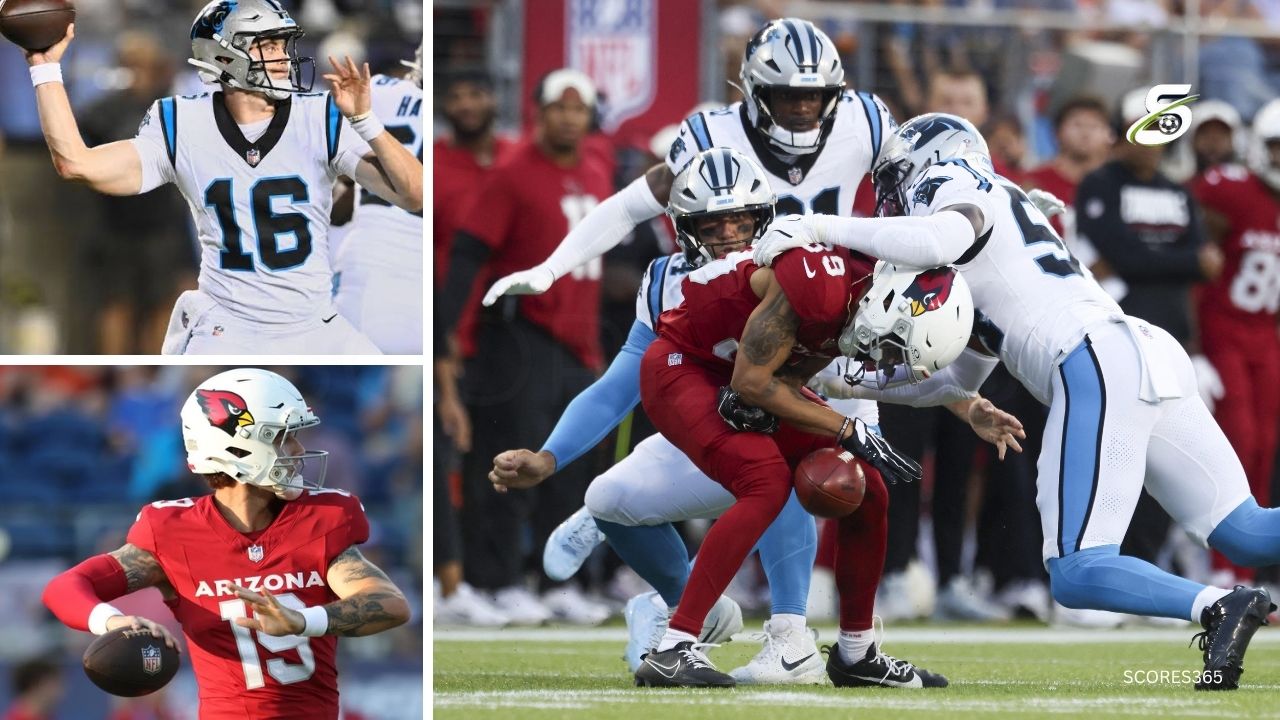
The Carolina Panthers vs Arizona Cardinals Match Player Stats from the 2026 Pro Football Hall of Fame Game showcase a dramatic preseason contest that went down to the final seconds. Carolina defeated Arizona 33–30 at Tom Benson Hall of Fame Stadium in Canton, Ohio, after quarterback Haynes King scored a five-yard rushing touchdown as time expired. The game featured several young players competing for important roster positions and provided an early opportunity to evaluate both teams' depth.
The Panthers rested starting quarterback Bryce Young, while Kenny Pickett started before giving way to King. Arizona also held out veteran quarterbacks Jacoby Brissett and Gardner Minshew, allowing rookie Carson Beck and Kedon Slovis to receive extended opportunities. Beck completed 15 of 19 passes for 188 yards and one touchdown, while King delivered the decisive performance for Carolina with 180 passing yards, two touchdown passes, and 39 rushing yards.
Match Result And Final Score
| Quarter | Carolina Panthers | Arizona Cardinals |
|---|---|---|
| First | 0 | 0 |
| Second | 17 | 17 |
| Third | 0 | 3 |
| Fourth | 16 | 10 |
| Final | 33 | 30 |
Match Overview
The Hall of Fame Game provided both teams with a useful early test for their depth charts. Carolina entered the contest without its starting quarterback, giving Pickett and King valuable opportunities to establish themselves. Arizona followed a similar approach, sitting its top two quarterbacks and allowing Beck to make his NFL debut before Slovis took over later in the contest.
The game remained competitive throughout the night, with both teams producing 17 points in the second quarter. Arizona added three points in the third, but Carolina responded with 16 points in the fourth quarter. The Panthers eventually completed a 13-play, 65-yard final drive, with King rushing five yards for the winning touchdown as the clock expired.
Team Statistics
The overall statistics underline the offensive nature of the contest, but the most important difference came from how each team performed during the closing possessions. Carolina produced the final scoring drive when it mattered most, while Arizona could not protect its three-point advantage after taking the lead late in the fourth quarter.
The Panthers' offensive approach also benefited from strong quarterback mobility. King supplied both passing production and rushing ability, which became particularly valuable on the final possession. Arizona received productive quarterback play from Beck and Slovis, giving the Cardinals plenty of encouraging signs despite the narrow defeat.
| Key Team Result | Panthers | Cardinals |
|---|---|---|
| Final Score | 33 | 30 |
| Second-Quarter Points | 17 | 17 |
| Third-Quarter Points | 0 | 3 |
| Fourth-Quarter Points | 16 | 10 |
| Result | Win | Loss |
Carolina Panthers Offensive Performance
Carolina's offense gradually found its rhythm as the game progressed. Kenny Pickett received the starting assignment and completed 8 of 11 passes for 62 yards, providing a steady opening performance. King then took over and became the central figure in the Panthers' comeback, combining accurate passing with aggressive rushing to keep Arizona's defense under pressure.
King completed 21 of 34 attempts for 180 yards and two touchdowns, while adding 39 rushing yards. His ability to extend plays became especially important on the final possession. Carolina also received contributions from its running backs and receivers, allowing the offense to maintain enough balance to finish the comeback successfully.
| Panthers Offensive Leader | Performance |
|---|---|
| Kenny Pickett | 8/11, 62 passing yards |
| Haynes King | 21/34, 180 passing yards, 2 TD |
| Haynes King | 39 rushing yards |
| Miles Davis | 4 carries, 53 yards |
| Jimmy Horn Jr. | 4 receptions, 44 yards |
| Ja'seem Reed | Receiving TD |
Arizona Cardinals Offensive Performance
Arizona also rotated its quarterbacks throughout the contest, giving rookie Carson Beck an extended opportunity to demonstrate his passing ability. Beck completed 15 of 19 attempts for 188 yards and one touchdown, producing one of the strongest individual performances of the night. His efficiency stood out despite this being his first NFL game action.
Kedon Slovis later completed 9 of 10 passes for 106 yards and one touchdown, including the late touchdown pass to Bryson Green that temporarily gave Arizona a 30–27 advantage. The Cardinals also received a productive rushing performance from Bam Knight, who finished with 60 yards on 12 carries.
| Cardinals Offensive Leader | Performance |
|---|---|
| Carson Beck | 15/19, 188 yards, 1 TD |
| Kedon Slovis | 9/10, 106 yards, 1 TD |
| Bam Knight | 12 carries, 60 yards |
| Jalen Brooks | 3 receptions, 99 yards |
| Simi Fehoko | Receiving TD |
| Bryson Green | Late receiving TD |
Passing Statistics
The quarterback battle provided one of the clearest statistical storylines from the Hall of Fame Game. Arizona rookie Carson Beck delivered an efficient debut, completing 15 of 19 attempts for 188 yards and one touchdown. He consistently moved the offense and showed poise while operating against Carolina's defensive depth. Kedon Slovis later added another 106 passing yards on 9-of-10 completions, keeping Arizona competitive into the final minutes.
Carolina received useful contributions from both Kenny Pickett and Haynes King. Pickett completed 8 of 11 passes for 62 yards before King took over and produced 180 passing yards with two touchdown passes. King's mobility added another dimension to the Panthers' offense, especially during the decisive final drive when he finished the comeback himself with a rushing touchdown.
Rushing Statistics
The rushing game produced several important individual performances, particularly for Arizona. Bam Knight led the Cardinals with 60 yards from 12 carries, giving Arizona a dependable option between the tackles. Carolina's Miles Davis created the biggest rushing play among the listed leaders, gaining 53 yards on only four attempts and averaging 13.3 yards per carry.
Haynes King's rushing contribution became even more important because his final five-yard touchdown run decided the game. That play capped a 13-play, 65-yard possession and demonstrated how quarterback mobility can become a major weapon during late-game situations. Arizona also received a one-yard rushing touchdown from Corey Kiner, while Carolina's A.J. Dillon added a one-yard score earlier in the game.
Receiving Statistics
Arizona produced one of the game's most explosive receiving performances through Jalen Brooks, who recorded three catches for 99 yards. His 33-yard average demonstrated how effectively the Cardinals attacked downfield. Simi Fehoko also made an important contribution by catching Carson Beck's five-yard touchdown pass during the second quarter.
Carolina relied on a more distributed receiving attack. Jimmy Horn Jr. led the Panthers' listed receivers with four catches for 44 yards, while Ja'seem Reed scored on a 15-yard touchdown reception from King. The Panthers did not need one receiver to dominate the box score because their quarterbacks spread opportunities across the offensive unit.
Defensive Performance
The defensive units faced difficult conditions throughout the night because both offenses repeatedly generated scoring opportunities. Carolina's defense ultimately needed to make enough stops to give its offense a final chance, while Arizona's defense appeared close to securing the victory after taking a 30–27 lead with less than two minutes remaining.
The deciding defensive sequence came during Carolina's final possession rather than through a single headline-grabbing statistic. The Panthers moved 65 yards across 13 plays and converted the drive into the winning touchdown. That sequence showed how preseason games can turn on execution from players competing for roster positions, even when many established starters remain on the sideline.
Special Teams Performance
Special teams played an important supporting role throughout the contest, particularly because the game remained within one score for much of the second half. Both teams converted their scoring opportunities effectively enough to keep the scoreboard moving, while the final result ultimately depended on Carolina's ability to complete its last offensive possession rather than settle for a potential tying opportunity.
The Panthers' final touchdown meant there was no need for another possession after King crossed the goal line as the clock expired. That ending gave Carolina the 33–30 victory and provided one of the clearest examples of how special teams and scoring execution can influence a preseason game where individual roster evaluations remain the primary objective.
Quarter-by-Quarter Breakdown
The opening quarter produced no points, but the second quarter immediately changed the game's pace. Both teams scored 17 points in that period, creating a 17–17 halftime score. Arizona then added the only points of the third quarter, taking a 20–17 lead before Carolina answered with a dramatic fourth-quarter surge.
Carolina scored 16 points during the final period, compared with Arizona's 10. The Cardinals briefly moved ahead 30–27 after Slovis connected with Bryson Green for a one-yard touchdown, but King responded with the decisive late drive. His five-yard rushing touchdown ended the contest at 33–30.
Top Performers
The Carolina Panthers vs Arizona Cardinals Match Player Stats show that Haynes King was the defining player of the Hall of Fame Game. After Kenny Pickett opened at quarterback, King took control of Carolina's offense and finished with 180 passing yards and two touchdown passes. He also added 39 rushing yards, including the five-yard touchdown that ended the game. His late-game composure turned a three-point deficit into a dramatic victory.
Arizona's Carson Beck also produced an encouraging debut. He completed 15 of 19 passes for 188 yards and one touchdown, giving the Cardinals an efficient passing performance. Jalen Brooks supplied an explosive receiving contribution with 99 yards on three catches, while Kedon Slovis later added 106 passing yards and a touchdown. These performances gave Arizona several positive signs despite the narrow defeat.
Team Comparison
Carolina and Arizona produced remarkably similar offensive output throughout the contest, but their approaches differed. Carolina eventually relied on King's dual-threat ability to complete the comeback, while Arizona used multiple quarterbacks and generated several explosive passing plays. The Cardinals' late touchdown appeared to put them in position to win before Carolina answered with the final scoring drive.
For both teams, the Hall of Fame Game served primarily as an evaluation opportunity for players competing for roster positions. Several established starters did not participate, so the performances from King, Beck, Slovis, Pickett and the younger skill-position players provided coaches with valuable preseason information.
Key Takeaways
The biggest takeaway from the matchup was King's ability to perform under pressure. His passing numbers were strong, but his final rushing touchdown carried even greater significance because it came after Arizona had regained the lead. Carolina's coaching staff also received useful information about the quarterback's ability to manage a long, pressure-filled drive when the game was on the line.
Arizona can still take several positives from the defeat. Beck showed impressive efficiency in his debut, Brooks created explosive plays, and Slovis delivered a late scoring drive. The Cardinals ultimately lost because Carolina produced the final answer, but the performances from several young players should provide valuable material for the rest of preseason evaluation.
Conclusion
The Carolina Panthers vs Arizona Cardinals Match Player Stats reveal a thrilling 33–30 Carolina victory in the 2026 Pro Football Hall of Fame Game. The Panthers overcame a late three-point deficit through a 13-play final drive, with Haynes King scoring the winning touchdown as time expired. His combination of passing production and rushing ability made him the standout performer of the night.
Arizona's Carson Beck, Kedon Slovis and Jalen Brooks also produced encouraging performances, ensuring the Cardinals had plenty of positives despite the result. Because the game focused heavily on preseason evaluation, individual performances carried significant importance beyond the final score. The matchup ultimately provided both teams with valuable information as they continued preparing for the 2026 NFL season.