

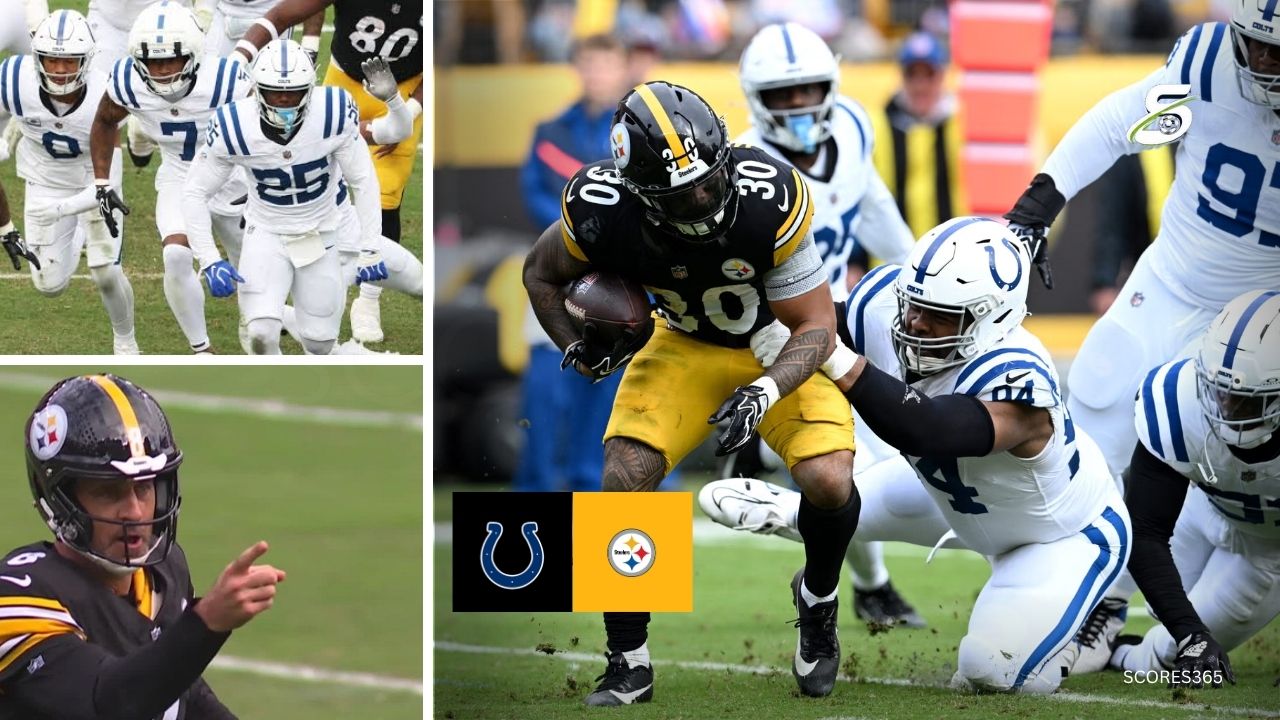
The Indianapolis Colts vs Pittsburgh Steelers Match Player Stats Complete Game Breakdown highlights a high-scoring Week 5 NFL matchup in which Pittsburgh defeated Indianapolis 34–22 on October 11, 2026. The game took place at Acrisure Stadium in Pittsburgh, Pennsylvania, where the Steelers combined explosive offensive plays with timely scoring to secure a 12-point victory. Quarterback Aaron Rodgers threw three touchdown passes, while running back Jaylen Warren produced two major touchdowns that changed the momentum of the contest.
Indianapolis remained competitive throughout much of the game, with quarterback Daniel Jones throwing for 267 yards and kicker Spencer Shrader converting five field goals. Tight end Tyler Warren also contributed a rushing touchdown and led the Colts with seven receptions for 83 yards. However, Pittsburgh found the end zone more consistently, particularly through Warren’s 80-yard touchdown reception and 50-yard touchdown run. The Steelers improved to 3–2, while the Colts fell to 2–3 after having their two-game winning streak snapped.
Final Score
| Team | Q1 | Q2 | Q3 | Q4 | Final |
|---|---|---|---|---|---|
| Indianapolis Colts | 6 | 7 | 6 | 3 | 22 |
| Pittsburgh Steelers | 7 | 10 | 7 | 10 | 34 |
The Pittsburgh Steelers won 34–22 after building their advantage through touchdowns, field goals and explosive plays. Indianapolis opened the scoring with a 57-yard field goal by Spencer Shrader, but Pittsburgh answered almost immediately with an 80-yard touchdown reception by Jaylen Warren from Aaron Rodgers. Shrader added another long field goal, leaving the Colts trailing 7–6 after the first quarter. Pittsburgh then scored 10 points in the second quarter to maintain its advantage at halftime.
The Colts stayed within reach during the third quarter, narrowing the margin with field goals from Shrader. However, Warren’s 50-yard rushing touchdown restored Pittsburgh’s control and pushed the Steelers ahead 24–16. Indianapolis continued to score, but the Steelers answered with another touchdown pass to Pat Freiermuth and a 54-yard field goal from Chris Boswell. Those late points prevented the Colts from mounting a successful comeback and secured Pittsburgh’s 34–22 victory.
Aaron Rodgers’ Passing Performance
Aaron Rodgers delivered an efficient performance for Pittsburgh, completing 22 of 31 passes for 235 yards and three touchdowns, without throwing an interception. His passing efficiency helped the Steelers capitalize on Indianapolis’ defensive opportunities and maintain pressure on the Colts’ secondary. Rodgers distributed the ball among several targets, with Pat Freiermuth providing two touchdown receptions and Jaylen Warren turning a short pass into an explosive 80-yard score. Pittsburgh’s ability to create big plays made its passing attack especially difficult to contain.
Rodgers’ opening-quarter touchdown pass to Warren immediately answered Indianapolis’ first field goal and established the Steelers’ early lead. He later connected with Freiermuth on a one-yard touchdown in the second quarter before finding the tight end again for a 17-yard score in the fourth. Those touchdowns were crucial because Indianapolis continued to produce points through Shrader’s field goals. Rodgers finished with a strong statistical line and avoided the interceptions that might have given the Colts additional opportunities to change the game.
Explore Houston Texans vs Tennessee Titans Match Player Stats Complete Game Breakdown
Daniel Jones’ Passing Stats for Indianapolis
Daniel Jones completed 24 of 44 passes for 267 yards, with no passing touchdowns and no interceptions. His yardage total kept Indianapolis competitive, and he found multiple receivers throughout the game. However, the Colts struggled to turn their passing production into touchdowns. Jones and the offense often had to rely on field goals after reaching scoring range, which made it difficult to keep pace with a Pittsburgh team that converted more of its important possessions into touchdowns.
Jones faced a challenging situation as the game moved into the second half. Indianapolis repeatedly reduced the deficit, including with a 40-yard field goal that made it 24–19 in the third quarter. The Colts then reached the Pittsburgh 10-yard line early in the fourth, but three consecutive incomplete passes ended the drive without a touchdown. Shrader converted the resulting 28-yard field goal, bringing Indianapolis within two points. The missed opportunity proved important when Pittsburgh scored again to extend its lead.
Jaylen Warren’s Two Explosive Touchdowns
Jaylen Warren was Pittsburgh’s standout offensive player, recording 101 rushing yards and 87 receiving yards for 188 yards from scrimmage. He scored twice, once as a receiver and once as a runner. His first touchdown came on an 80-yard pass from Rodgers in the opening quarter. Warren caught the short pass, broke away from a defender and sprinted down the right sideline to give Pittsburgh a 7–3 lead. The play demonstrated his ability to turn a routine completion into a major scoring opportunity.
Warren’s second touchdown was equally important. In the third quarter, he ran for 50 yards, breaking through the defensive front and finding open space downfield. The score increased Pittsburgh’s lead to 24–16 after the extra point. Indianapolis had just moved closer with a field goal, so Warren’s long run immediately shifted momentum back toward the Steelers. His combination of rushing and receiving production gave Pittsburgh a versatile offensive weapon and made him the game’s most influential individual performer.
Tyler Warren and the Colts’ Offensive Contributors
Tyler Warren led Indianapolis in receiving, recording seven receptions for 83 yards. He also scored the Colts’ only touchdown, a one-yard rushing score in the second quarter. Warren lined up in the backfield on the fourth-down play and pushed through on a second effort to reach the end zone. The touchdown brought Indianapolis closer to Pittsburgh and showed the Colts’ ability to create scoring opportunities near the goal line despite their inconsistent passing results.
Jonathan Taylor added 45 rushing yards on 15 carries and contributed three receptions for 37 yards. Josh Downs recorded three catches for 47 yards, while Keenan Allen finished with five receptions for 45 yards. These contributions helped Jones accumulate 267 passing yards, but Indianapolis did not find a way to score a passing touchdown. The Steelers’ offense proved more productive in the red-zone moments that mattered, while the Colts’ reliance on Shrader’s five field goals left them needing additional touchdowns to win.
Key Player Statistics Table
The main offensive statistics illustrate the different paths each team took during the game. Pittsburgh received significant production from Rodgers, Warren and Freiermuth, while Indianapolis depended on Jones’ passing yardage, Tyler Warren’s receiving work and Shrader’s kicking. The Colts generated yardage but were unable to turn enough drives into touchdowns. Pittsburgh’s explosive plays created a larger scoring return from its offensive production, especially when Warren broke away for his two long scores.
| Player | Team | Passing | Rushing | Receiving |
|---|---|---|---|---|
| Aaron Rodgers | Steelers | 22/31, 235 yards, 3 TD | 1 carry, 6 yards | — |
| Jaylen Warren | Steelers | — | 15 carries, 101 yards, 1 TD | 6 catches, 87 yards, 1 TD |
| Pat Freiermuth | Steelers | — | — | 5 catches, 44 yards, 2 TD |
| Germie Bernard | Steelers | — | — | 6 catches, 80 yards |
| Daniel Jones | Colts | 24/44, 267 yards, 0 TD | 3 carries, 4 yards | — |
| Jonathan Taylor | Colts | — | 15 carries, 45 yards | 3 catches, 37 yards |
| Tyler Warren | Colts | — | 1 carry, 1 yard, 1 TD | 7 catches, 83 yards |
| Josh Downs | Colts | — | — | 3 catches, 47 yards |
These figures show why Warren was central to Pittsburgh’s win. His 188 yards from scrimmage came with touchdowns as both a receiver and a runner, giving the Steelers two scoring plays that stretched the Indianapolis defense. Freiermuth’s two touchdown catches also helped Rodgers turn drives into points. For the Colts, Tyler Warren’s combined receiving and rushing contributions were valuable, but the team needed a more productive red-zone performance to match Pittsburgh’s scoring output.
Spencer Shrader Sets the Pace with Five Field Goals
Spencer Shrader accounted for a major share of Indianapolis’ points, converting five field goals from 57, 56, 22, 40 and 28 yards. His opening 57-yard kick gave the Colts an early lead, and he followed with a 56-yarder later in the first quarter. Shrader continued scoring in the second half, keeping Indianapolis within striking distance even as Pittsburgh added touchdowns. His five successful field goals tied the Colts’ franchise record, making his performance one of the game’s notable individual achievements.
Although Shrader was consistently accurate, the Colts’ dependence on field goals ultimately worked against them. Pittsburgh scored touchdowns through Warren and Freiermuth, earning seven points from successful extra-point conversions after its touchdown plays. Indianapolis often came away with three points from possessions that might have required a touchdown to change the game’s momentum. Shrader’s record-tying performance kept the score close, but the offense’s inability to finish several drives in the end zone left Pittsburgh with enough room to protect its lead.
Team Statistics: Colts vs Steelers
The official team statistics show that Indianapolis finished with 332 total net yards, while Pittsburgh recorded 352. The yardage difference was relatively small, suggesting that the result was not simply a matter of one offense dominating every possession. Instead, Pittsburgh was more effective at producing explosive scoring plays and converting its opportunities into touchdowns. Indianapolis had enough offensive production to remain competitive, but the Steelers’ efficiency in key moments created the difference on the scoreboard.
| Team statistic | Indianapolis Colts | Pittsburgh Steelers |
|---|---|---|
| Total net yards | 332 | 352 |
| Passing yards | 267 | 235 |
| First downs | — | — |
| Penalties | 9 | 6 |
| Penalty yards | 59 | 50 |
| Time of possession | 32:00 | 28:00 |
| Final score | 22 | 34 |
Indianapolis held the ball for more time and gained more passing yards, but Pittsburgh made better use of its possessions. The Steelers were penalized six times for 50 yards, compared with nine penalties for 59 yards by the Colts. Although Indianapolis had the advantage in possession time, its offense could not match Pittsburgh’s touchdown production. The comparison demonstrates why total yardage alone does not determine the winner: explosive plays and successful red-zone execution can outweigh modest advantages in time of possession or passing statistics.
Pat Freiermuth and Pittsburgh’s Receiving Attack
Pat Freiermuth was another important contributor for Pittsburgh, catching five passes for 44 yards and two touchdowns. His first scoring reception came on a one-yard pass from Rodgers in the second quarter, helping the Steelers extend their lead to 14–6. His second touchdown arrived in the fourth quarter, when he caught a 17-yard pass to put Pittsburgh ahead 31–22. That score was particularly valuable because Indianapolis had kept the game within reach through its kicking performance.
Germie Bernard also contributed six receptions for 80 yards, giving Rodgers another reliable target in the passing game. D.K. Metcalf recorded three receptions for 12 yards, while Darnell Washington added two catches for 12 yards. Pittsburgh’s receiving production was spread across multiple players, but Warren’s 80-yard touchdown and Freiermuth’s two scores had the greatest impact on the final result. The Steelers demonstrated that they could generate explosive gains and finish drives through both short-range and intermediate passing plays.
Fourth-Quarter Turning Points and Game Flow
The third quarter was a turning point because Indianapolis appeared to be closing the gap. Shrader’s 22-yard field goal made the score 17–16, leaving Pittsburgh with only a one-point lead. Warren’s 50-yard touchdown run came five plays later, restoring the Steelers’ advantage to eight points. Shrader then added a 40-yard field goal to make it 24–19, keeping the Colts close heading into the final period. The exchange of scores created a tense finish, but Pittsburgh retained control of the lead.
Early in the fourth quarter, Jonathan Taylor ran for 20 yards to help Indianapolis reach the Pittsburgh 10-yard line. However, Jones threw three consecutive incomplete passes, and the Colts settled for another field goal. Pittsburgh then answered with Rodgers’ 17-yard touchdown pass to Freiermuth. Boswell’s 54-yard field goal later extended the lead to 34–22 with 3:43 remaining. The Colts could no longer close the gap, and Pittsburgh secured the victory by finishing its late scoring opportunities more effectively.
What the Result Means for Both Teams
The victory moved Pittsburgh to 3–2, giving the Steelers an important win in the AFC North. Rodgers’ three touchdown passes, Warren’s 188 yards from scrimmage and Freiermuth’s two touchdown receptions provided a strong offensive foundation. Pittsburgh’s ability to score from long distance through Warren also created a challenge that Indianapolis struggled to answer. Although the Steelers allowed 22 points and surrendered 332 net yards, their scoring efficiency and ability to respond to Colts field goals proved decisive.
Indianapolis dropped to 2–3, ending its two-game winning streak. The Colts had several positive individual performances, including Jones’ 267 passing yards, Tyler Warren’s 83 receiving yards and Shrader’s five field goals. However, their offense needed touchdowns rather than repeated field goals to keep pace with Pittsburgh. The failed red-zone opportunity early in the fourth quarter was particularly costly. Indianapolis will need to improve its finishing ability in future games, while Pittsburgh can build on its effective combination of quarterback play and explosive running-back production.
Conclusion
The Indianapolis Colts vs Pittsburgh Steelers Match Player Stats Complete Game Breakdown shows that Pittsburgh earned its 34–22 victory through explosive offensive plays and effective touchdown conversion. Aaron Rodgers completed 22 of 31 passes for 235 yards and three touchdowns, while Jaylen Warren accumulated 188 yards from scrimmage and scored on an 80-yard reception and a 50-yard run. Pat Freiermuth added two touchdown catches, helping the Steelers maintain their advantage through the second half and finish strongly in the fourth quarter.
Indianapolis generated 332 net yards and received a record-tying five field goals from Spencer Shrader, but the Colts could not turn enough possessions into touchdowns. Daniel Jones passed for 267 yards, and Tyler Warren contributed both a rushing touchdown and 83 receiving yards. Ultimately, Pittsburgh’s ability to make big plays and finish scoring drives separated the teams. The Steelers improved to 3–2, while Indianapolis fell to 2–3 and was left to address its red-zone struggles ahead of its next matchup.
Explore More SCORES365